

Choose the Right Types of Cement for Construction Project
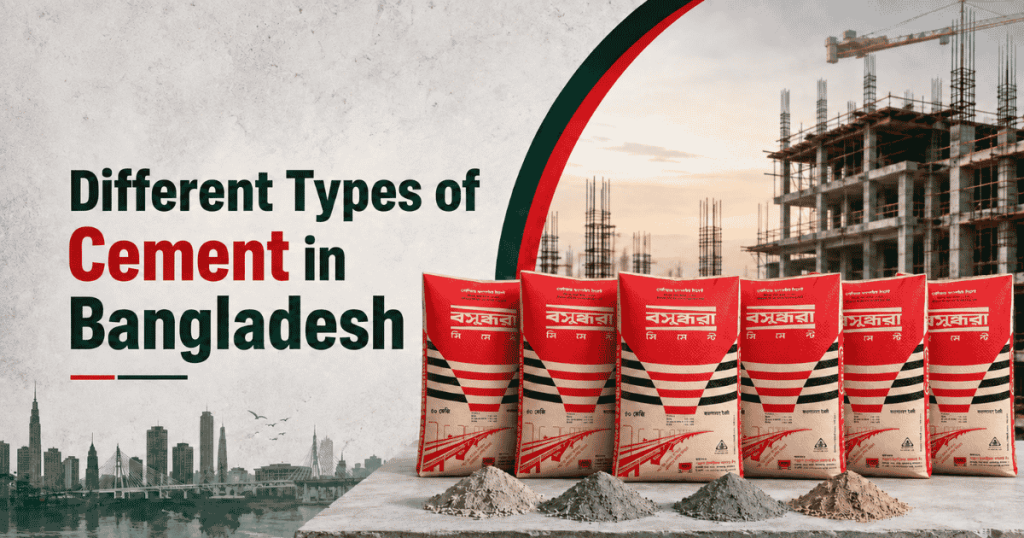
There are several different types of cement in Bangladesh, each designed for specific construction needs, environmental conditions, and strength requirements. The most commonly used options include Ordinary Portland Cement (OPC), Portland Composite Cement (PCC), Portland Pozzolana Cement (PPC), blast furnace slag cement, rapid-hardening cement, sulphate-resistant cement, and white cement. Choosing the right type of cement depends on whether it will be used for residential buildings, high-rise structures, roads, bridges, foundations, marine construction, plastering, or other specialized applications.
In Bangladesh, factors such as humid weather, monsoon conditions, soil characteristics, project type, concrete strength, durability, and exposure to water or sulphates can influence cement selection. This guide explains the major types of cement available in Bangladesh, their properties, common uses, advantages, and how to choose the most suitable cement for your construction project.
Why Choosing the Right Type of Cement Matters
Imagine using the wrong cement for a coastal building. Or using a weak mix for a heavy foundation. The result? Cracks, damage, and expensive repairs.
Choosing the right type of cement is not just a technical decision. It is a decision that affects safety, durability, and cost. The right cement:
- Holds structures together for decades
- Saves money on repairs and maintenance
- Performs well in Bangladesh’s hot and humid climate
- Meets specific construction needs
So let us understand what options are out there — and what you can actually get in Bangladesh.
Different Types of Cement in Bangladesh
There are many types of cement used around the world. Here is a look at all of them — along with a note on which ones are available in Bangladesh.
1. Ordinary Portland Cement (OPC)
Ordinary Portland Cement, or OPC, is the most used cement in the world — and in Bangladesh too. It is the standard choice for most construction projects.
Key Features
- Fast strength gain — becomes strong quickly after setting
- Good for general construction work
- Available in different grades: OPC 33, OPC 43, and OPC 53
Where It Is Used
- Residential homes and apartments
- Roads and pavements
- Bridges and flyovers
- Columns and beams
Bashundhara Cement produces high-quality OPC that meets BSTI standards. OPC 53 is the strongest grade and is often used in heavy structures.
2. Portland Composite Cement (PCC)
Portland Composite Cement, or PCC, is made by blending OPC clinker with multiple supplementary materials such as limestone, fly ash, or slag. It is a versatile and popular option.
Key Features
- Good balance of strength and durability
- Lower heat of hydration — reduces risk of cracking
- More sustainable than plain OPC
- Cost-effective for a wide range of projects
Where It Is Used
- General building construction
- Plastering and masonry work
- Foundations and slabs
- Roads and infrastructure
PCC is one of the most popular cement types in Bangladesh today. Bashundhara Cement offers quality PCC that is trusted by builders and homeowners across the country.
3. Portland Pozzolana Cement (PPC)
Portland Pozzolana Cement is made by mixing OPC clinker with pozzolanic materials — usually fly ash or volcanic ash. It is a more eco-friendly option with strong long-term durability.
Key Features
- Slower strength gain compared to OPC
- Better long-term durability
- Less heat during setting — reduces cracking
- More resistant to chemical attacks
Where It Is Used
- Mass concrete works such as dams and large foundations
- Coastal and marine structures
- Sewage and water treatment plants
- Roads in humid climates
PPC is well-suited for Bangladesh’s humid climate and coastal regions. While Bashundhara Cement does not currently produce PPC, it is available in the market from other manufacturers.
4. Portland Slag Cement (PSC)
Portland Slag Cement is made by blending OPC clinker with ground granulated blast furnace slag (GGBS). It is known for its high durability in aggressive environments.
Key Features
- Excellent resistance to saltwater and chemicals
- Very low heat of hydration
- Great for underground and marine structures
- Eco-friendly — uses industrial byproduct
Where It Is Used
- Port and harbor construction
- Underground structures
- Industrial plants near water
- Areas with high sulfate content in soil
PSC is mostly used in countries with large steel industries that produce blast furnace slag as a byproduct. It is not widely available in the Bangladeshi market.
5. Sulfate Resistant Cement (SRC)
Some soil and water contain high levels of sulfate. Normal cement can break down when it comes in contact with sulfate. Sulfate Resistant Cement is specially made to handle this.
Key Features
- Low content of tricalcium aluminate (C3A)
- Strong resistance to sulfate attack
- Long service life in aggressive environments
Where It Is Used
- Foundations in sulfate-rich soil
- Sewage treatment works
- Underground structures
- Coastal embankments
SRC is a specialty cement that is not widely available through regular market channels in Bangladesh. It is typically imported for specific large-scale or government infrastructure projects.
6. Rapid Hardening Cement
Rapid Hardening Cement gains strength much faster than OPC. It is finely ground and has a higher proportion of tricalcium silicate.
Key Features
- High early strength
- Sets and hardens faster than regular cement
- Ideal for emergency repairs
- Less curing time needed
Where It Is Used
- Road repair and patching
- Precast concrete products
- Projects with tight deadlines
This type of cement is more common in developed countries and is not a standard product in the Bangladesh market. Local builders usually work with OPC or PCC for time-sensitive projects.
7. Low Heat Cement
When large amounts of concrete are poured at once — like in a dam or a big foundation — a lot of heat is generated. This heat can cause cracks. Low Heat Cement is made to solve this problem.
Key Features
- Produces very little heat during setting
- Reduces thermal cracking
- Slower strength development
- Higher long-term durability
Where It Is Used
- Dams and massive retaining walls
- Large bridge foundations
- Mass concrete pours
Low Heat Cement is mainly used in large dam or hydro projects. It is not a standard product in the Bangladesh market. For mass concrete work locally, PCC or PPC is typically used instead.
8. White Cement
White Cement is a special type of OPC. It is made using raw materials with very low iron oxide content — which gives it a bright white color.
Key Features
- White or off-white in color
- Used mainly for decorative purposes
- Can be tinted with pigments
- Higher cost than regular cement
Where It Is Used
- Tile grout and flooring
- Plaster and render finishes
- Swimming pools
- Decorative concrete features
White cement is not produced locally in Bangladesh and is usually imported. It is available at specialty stores for finishing and decorative work but is not part of the standard cement market.
9. Masonry Cement
Masonry Cement is a pre-blended mix designed for brickwork and blockwork. It has additives that make it more workable and flexible.
Key Features
- Easy to mix and apply
- High workability and plasticity
- Better adhesion to bricks and blocks
- Good weather resistance
Where It Is Used
- Laying bricks and blocks
- Wall plastering
- Pointing and jointing
In Bangladesh, builders typically use OPC or PCC mixed with sand for brickwork and plastering. Masonry cement as a pre-blended product is not widely sold here.
10. Expansive Cement
Most cement shrinks slightly as it dries. Expansive Cement does the opposite — it expands a little. This property makes it useful in very specific repair situations.
Key Features
- Slight expansion on setting
- Compensates for drying shrinkage
- Ideal for grouting and repair work
Where It Is Used
- Grouting anchor bolts
- Filling cracks in concrete
- Repairing structural defects
Expansive cement is a niche product used mostly in specialized industrial or infrastructure repair work. It is not widely available in the Bangladeshi market.
Bashundhara Cement — Quality OPC and PCC for Bangladesh
Now that you know about the different types of cement and what is available in Bangladesh, the next question is simple — which brand should you trust?
Bashundhara Cement is one of the most trusted names in Bangladesh’s construction industry. They produce two of the most widely used cement types in the country: OPC and PCC.
Bashundhara OPC — Built for Strength
Bashundhara Cement’s OPC is ideal for structural work that needs high early strength. It is the go-to choice for columns, beams, foundations, and heavy-load structures. Every bag meets BSTI quality standards.
Bashundhara PCC — Built for Versatility
Bashundhara Cement’s PCC is perfect for a wide range of construction needs — from general building work to plastering, slabs, and infrastructure. It offers a great balance of strength, workability, and value.
Consistent Quality, Every Bag
Bashundhara Cement follows strict quality control at every step of production. Whether it is OPC or PCC, you get a reliable product that performs consistently — batch after batch.
Trusted by Professionals Across Bangladesh
Engineers, architects, and contractors across Bangladesh rely on Bashundhara Cement for residential, commercial, and infrastructure projects. The brand has earned that trust over years of consistent performance.
Available Nationwide
You can find Bashundhara Cement at hardware stores and construction suppliers across Bangladesh — from Dhaka to Chittagong, Sylhet to Khulna. Availability is never a problem.
How to Choose the Right Types of Cement for Your Project in Bangladesh
| Cement Type | Best For | Key Strength | Strength / Grade |
|---|---|---|---|
| OPC | Columns, beams, bridges, high-rise buildings, roads | Fast strength gain | High |
| PCC | General building, slabs, plastering, foundations, roads | Balanced strength and durability | Moderate to High |
| PPC | Coastal areas, dams, mass concrete, humid zones | Long-term durability; resistant to moisture and chemical attack | Moderate |
| PSC | Marine structures, ports, underground works, water tanks | Excellent resistance to saltwater, sulfates, and chemicals | Moderate |
| SRC | Sulfate-rich soil, sewage plants, basement foundations | Very high sulfate resistance; long service life in aggressive soil | High |
| Rapid Hardening Cement | Emergency repairs, precast concrete, fast-track projects | Very high early strength; shortest curing time | High |
| Low Heat Cement | Dams, large retaining walls, mass concrete pours | Minimal heat generation; prevents thermal cracking | Low to Moderate |
| White Cement | Tile grout, decorative plaster, swimming pools, finishes | Decorative finish; not for structural use | Low |
| Masonry Cement | Brickwork, wall plastering, pointing and jointing | High workability and adhesion to bricks | Low to Moderate |
| Expansive Cement | Crack filling, grouting anchor bolts, structural repairs | Controlled expansion on setting; prevents shrinkage gaps | Moderate |
Still Not Sure? Ask an Expert
When in doubt, always consult a civil engineer or certified contractor. They can recommend the best cement type based on your site conditions and project requirements.
Frequently Asked Questions (FAQ)
What types of cement are available in Bangladesh?
In Bangladesh, the three main types of cement available in the market are OPC (Ordinary Portland Cement), PCC (Portland Composite Cement), and PPC (Portland Pozzolana Cement). Other types exist globally but are not commonly sold here.
What types of cement does Bashundhara Cement produce?
Bashundhara Cement currently produces two types: OPC (Ordinary Portland Cement) and PCC (Portland Composite Cement). Both are widely available across Bangladesh and are trusted by builders and homeowners alike.
What is the difference between OPC and PCC?
OPC gains strength faster and is ideal for structural work that needs high early strength. PCC is more versatile, produces less heat, and is suitable for a wider range of general construction tasks. Both are available from Bashundhara Cement.
Is PPC available in Bangladesh?
Yes, PPC (Portland Pozzolana Cement) is available in Bangladesh from various manufacturers. It is particularly good for coastal construction and humid environments. However, Bashundhara Cement does not currently produce PPC.
Which cement is best for home construction in Bangladesh?
For most residential homes in Bangladesh, either OPC or PCC works well. OPC is better for structural work like columns and foundations. PCC is great for plastering, slabs, and general building. Bashundhara Cement offers both.
Is Bashundhara Cement available all over Bangladesh?
Yes. Bashundhara Cement is widely available at hardware stores and construction suppliers across Bangladesh — from major cities to smaller towns.
Conclusion
Cement may look the same in every bag. But each type is built for a different purpose. And when you know the difference, you can make smarter choices for your project. In Bangladesh, the market is clear: OPC, PCC, and PPC are the main types of cement available. Other types exist globally but are not part of the local market yet. For the most trusted OPC and PCC in Bangladesh, Bashundhara Cement is the name to rely on. Quality you can count on. Availability you can depend on. Performance that speaks for itself.
Build smart. Build strong. Built with Bashundhara Cement.